
Can a buckled surfboard be repaired?
A buckle means the board has suffered structural damage without necessarily breaking completely in two. Many buckled boards are repairable, but the crease needs to be assessed across the deck, bottom and rails.
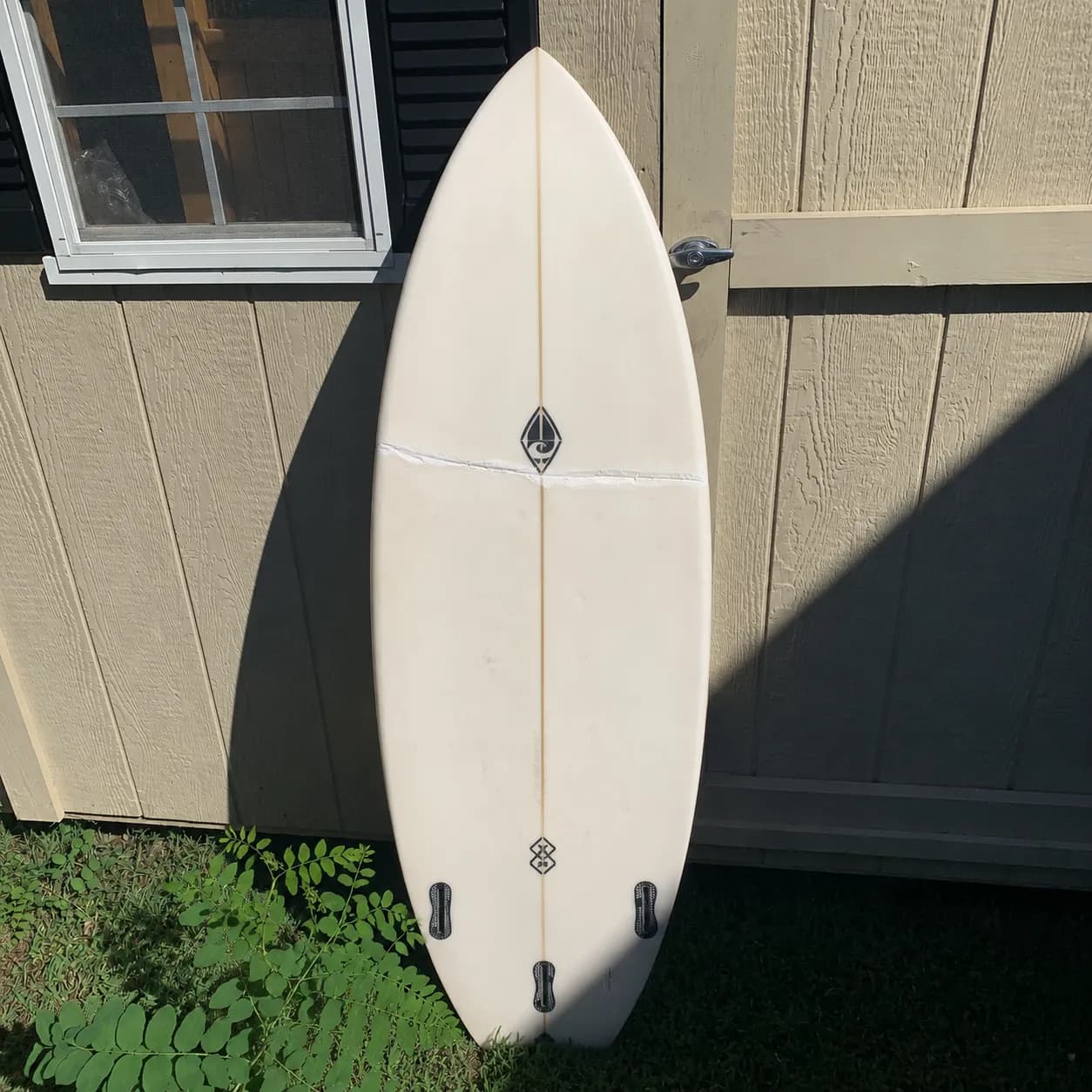
What does a buckled surfboard look like?
A buckle often appears as a crease running across part or all of the board. The laminate may be cracked, whitened or compressed and one or both rails can show signs of stress.
Some buckles are subtle. The board may still be in one piece while the underlying structure has been weakened.
What is the difference between a buckle and a snap?
A buckled board remains joined, although it may have bent enough to damage the laminate, foam or stringer.
A full snap is a complete structural break where the board has separated or effectively broken through. Both need proper assessment, but a snapped board generally involves a more extensive rebuild.
Can a buckled board be repaired?
Often, yes. James needs to see how far the crease extends, whether the rails are involved and how much of the internal structure has been affected.
The repair has to restore the damaged section rather than simply cover the visible crack, so the work required depends on what has failed beneath the surface.
How much does a buckled surfboard repair cost?
Buckled surfboard repairs at Whitburn Studio start from £160.
The final cost depends on the position and severity of the buckle and how much structural rebuilding is required. James confirms the price after reviewing the board and photographs.
Should you surf a buckled board?
A visible buckle is evidence that the board has already been heavily stressed. Continuing to surf it can place further load through an area that may no longer have its original strength.
Keep the board dry and have the damage assessed before deciding whether to use it again.
How to photograph a buckle
Photograph the complete board first. Then photograph the crease across the deck and bottom, followed by both rails where the damage reaches them.
A low side angle is particularly useful for showing whether the outline or rocker has changed around the damaged section.