
Does my surfboard ding need repairing?
If a ding has broken the board's watertight skin, exposed the foam or weakened the surrounding laminate, it should be repaired before the damage has a chance to become worse.
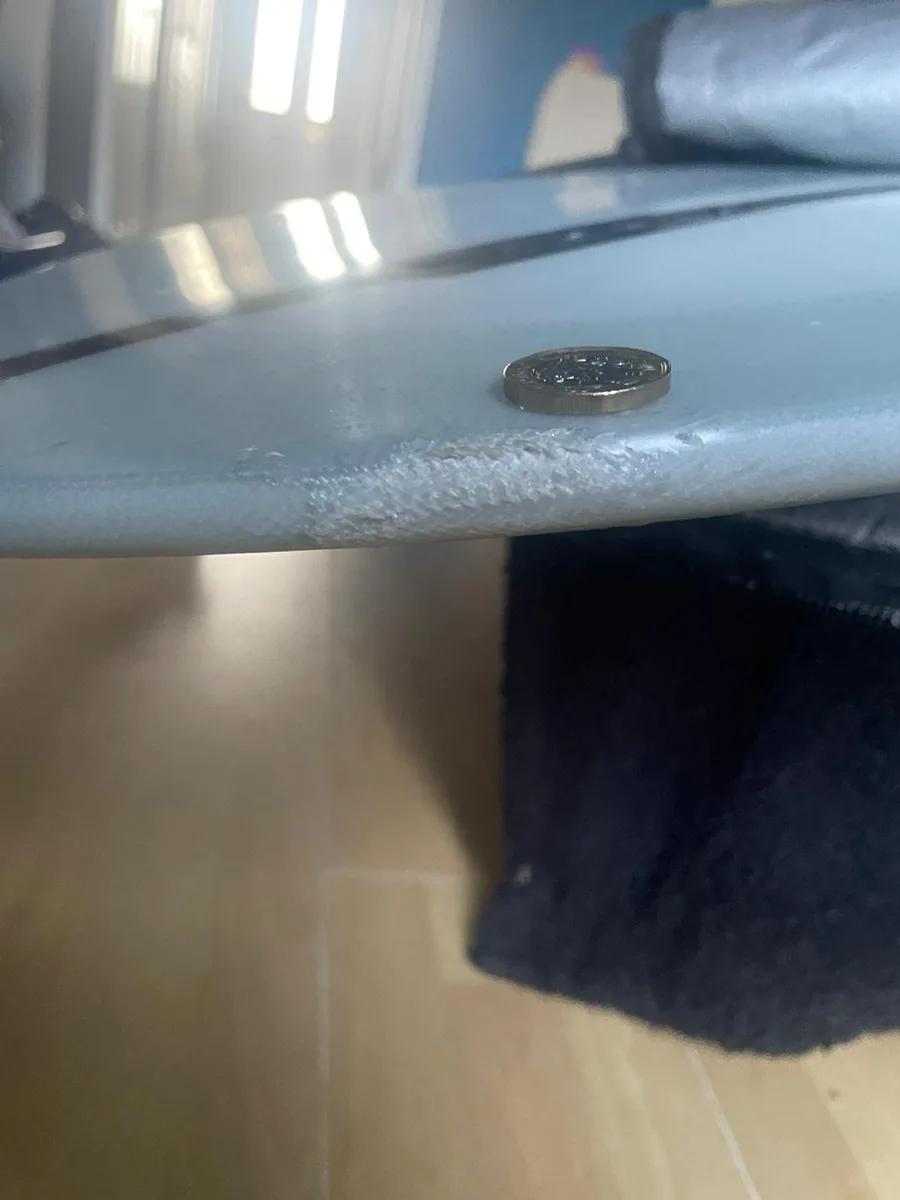
Start by checking whether the surface is still sealed
A surfboard can pick up cosmetic marks that do not break the laminate, but an open crack, puncture or missing piece of glass is different.
If you can see exposed foam, an opening through the laminate or an area that flexes when it should be solid, stop treating it as a cosmetic mark and have it assessed.
Small dings still need to be watertight
A small ding does not have to look dramatic to matter. A short crack or puncture can still allow water into the board.
Small professional ding repairs at Whitburn Studio start from £40, so dealing with straightforward damage early can be preferable to allowing water or movement to affect a larger area.
Rail dings deserve particular attention
Rails are curved and regularly loaded while the board is being surfed, so a crack there can involve more than the obvious surface mark.
Photograph the rail from above and from the side so James can see both the damaged laminate and whether the shape itself has been crushed or distorted.
What if the board has taken on water?
If an open ding has been surfed, tell James how long the board stayed in the water afterwards and whether you have noticed water escaping or a change in weight.
Do not immediately seal obvious moisture inside the board without understanding the damage. Include the information in the repair brief so it can be considered as part of the assessment.
What if it is only a pressure dent?
Not every depression in the deck is an open ding. Boards naturally develop pressure marks from use.
The important distinction is whether the laminate remains intact and firmly bonded. Cracking, soft movement or a hollow raised area can indicate a different problem such as fractured laminate or delamination.
When should I stop surfing the board?
Stop using the board when the damage is open to water, the structure has softened or moved, a fin box is loose, or a buckle or crack suggests the board has been structurally compromised.
If you are unsure, photographs are enough to begin. James can assess the damage before you bring the board to the workshop.
Send the damage before trying to fix it
Take photographs before sanding, cutting or filling the ding. Show the whole board, the damaged area in context and a sharp close-up.
Choose the closest damage type in the repair brief and add a note if you are unsure. James can confirm what the damage actually needs.