
Should you repair or replace a damaged surfboard?
A damaged surfboard is often worth assessing before it is written off. The decision depends on the damage, what the repair involves and how much value the board still has to you.
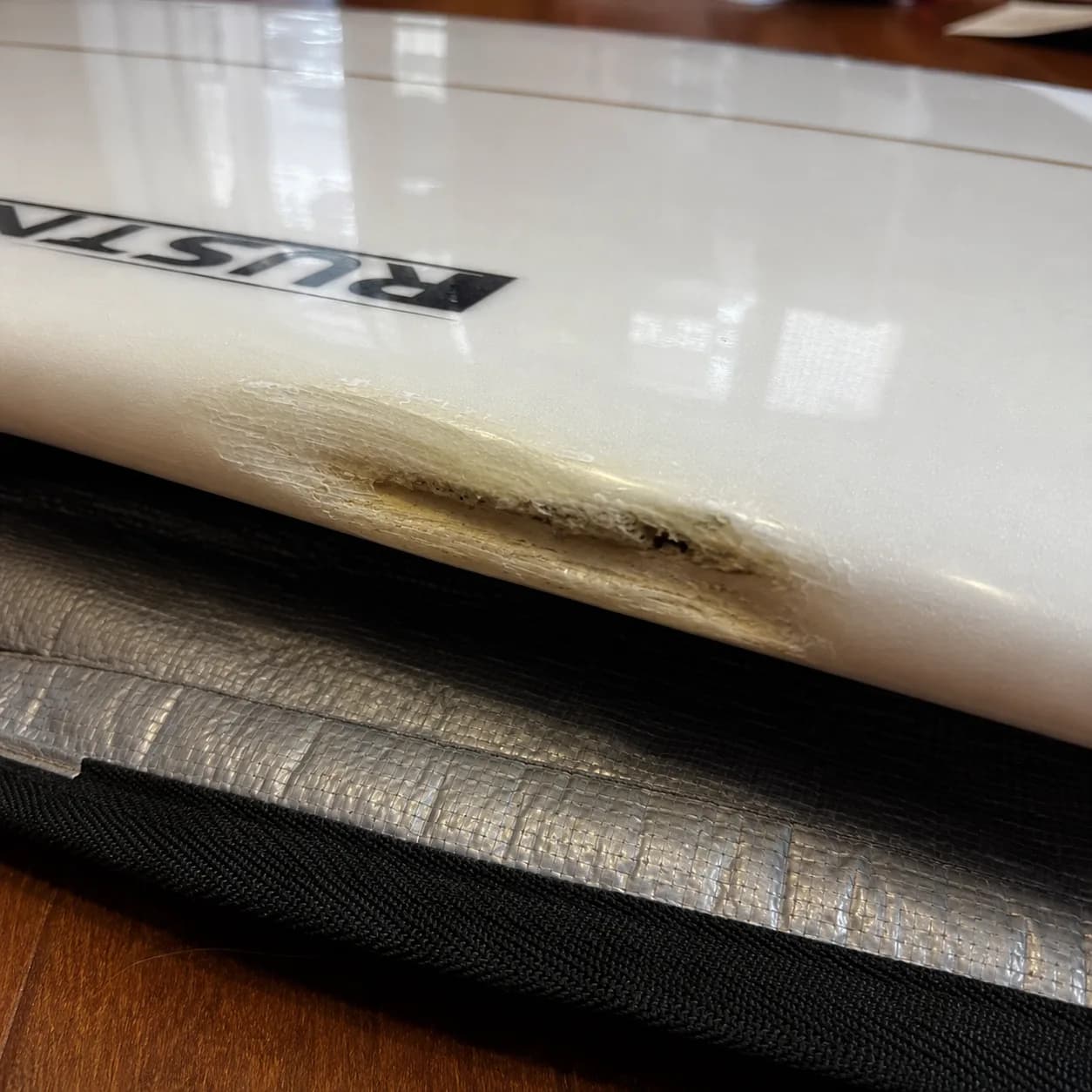
Small and localised damage is usually an easy decision
Small dings, cracks and local rail damage are routine reasons to repair a board rather than replace it.
The important thing is dealing with an open area before water ingress or continued use turns a straightforward repair into a larger one.
Fin box damage can look worse than it is
A fin box that has cracked, loosened or pulled out can be dramatic, but it does not automatically mean the whole board is finished.
James assesses the fitting together with the surrounding laminate and foam. Fin box repairs at Whitburn Studio start from £70.
Delamination depends on what is underneath
Localised delamination can often be repaired, particularly when the underlying core remains in reasonable condition.
Large areas, water ingress or damaged foam make the decision more involved. Delamination repairs start from £60, with the final cost depending on the extent of the separation.
A buckle needs structural assessment
A creased or buckled board has suffered more than superficial damage even when it has not snapped completely.
Buckled-board repairs start from £160. James needs to assess the crease, rails and internal damage before deciding what rebuilding is necessary.
Even a snapped surfboard may be repairable
A complete break does not automatically mean the board belongs in the bin. Some snapped boards can be rebuilt and returned to use.
Full snapped-board repairs start from £250, so this is where the value, condition and significance of the board become more important to the decision.
Think about the board, not only its replacement price
A board you know well, a favourite custom shape or something with personal value may be worth repairing even when the work is substantial.
Conversely, extensive damage to a board you were already planning to replace may make a large repair harder to justify.
Previous repairs do not automatically rule it out
An earlier repair is useful information rather than an automatic reason to reject the board.
Tell James if the same area has been worked on before and include clear photographs. The condition of the existing repair can then form part of the assessment.
When photographs are enough to start
You do not need to decide for yourself whether the board is repairable. Send photographs showing the whole board, the damaged area and a close view through the repair brief.
James can then tell you whether the damage looks suitable for repair, whether it needs workshop inspection and what the likely next step is.