
Can surfboard delamination be repaired?
Delamination happens when the fibreglass laminate separates from the material beneath it. It can often be repaired, but the size, cause and condition of the foam underneath all matter.
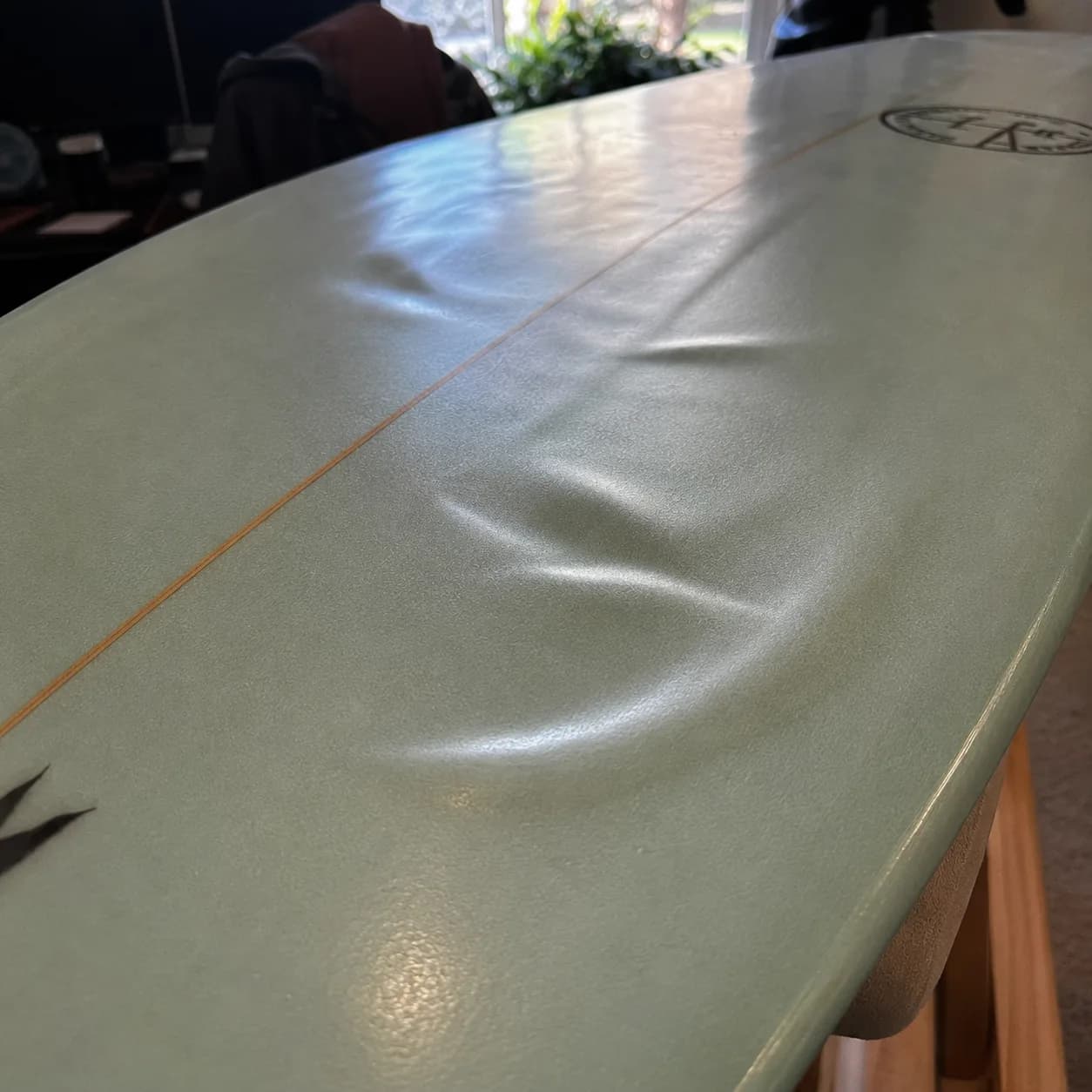
What surfboard delamination looks and feels like
A delaminated area often feels raised, hollow or soft compared with the surrounding board. It can appear as a visible bubble beneath the fibreglass, but the edge of the affected area is not always obvious.
Some delamination moves slightly under light pressure or sounds different when gently tapped. Avoid repeatedly pressing a raised area to test it, as the separation may extend beyond what you can see.
What causes a surfboard to delaminate?
Heat is a common cause. Air inside the board can expand when a surfboard is left in a hot car, direct sun or another high-temperature environment, placing pressure on the bond between the laminate and the core.
Water ingress, repeated compression under the feet, an impact or an earlier damaged area can also contribute. More than one factor may be involved, which is why the visible bubble does not always tell the whole story.
Can delamination be repaired?
Often, yes. A localised dry area is very different from extensive separation over damaged or waterlogged foam, so James needs to understand what is happening beneath the laminate before confirming the repair.
The repair may require the affected laminate to be opened or removed, the underlying area prepared or rebuilt, and the board re-laminated and finished. The exact route depends on what is found once the damage is properly assessed.
How much does surfboard delamination repair cost?
Delamination repairs at Whitburn Studio start from £60. Larger areas, damaged foam, water ingress and more involved finishing can increase the cost.
Send the damage through the repair brief with clear photographs. James will review the affected area and confirm what work is required and what it will cost before the repair goes ahead.
What should you do with a delaminated board?
Keep the board away from excessive heat and do not continue surfing it if the area is open to water. Avoid drilling, cutting, injecting resin or repeatedly pushing the bubble down before the damage has been assessed.
If there is an open crack, the immediate priority is preventing further water from entering the board.
Photographing delamination for assessment
Send one photograph showing the whole board, another showing where the delamination sits on the deck or bottom, and a close photograph of the affected area.
A low side angle is particularly useful because it shows how far the laminate has lifted. Mention when you first noticed the damage, whether the board has been exposed to unusual heat and whether you think it has taken on water.